a baby memory book alternative for parents who never finish one
a lot of baby memory books are full for two weeks and then quietly stop. it isn't a lack of love. the book was made for a calmer life than the one you're living.
if yours is in a drawer with a pen still in it, this is for you: why it happens, what to look for instead, and five ways to keep the first year that fit around a baby rather than the other way round.
why memory books stay half-empty
- the pages ask for the big moments, at exactly the time you have the least of everything.
- the prompts don't fit your baby. the "first tooth" page waits for months, and then the moment has passed.
- it lives on a shelf, and you live with your phone in your hand.
- one missed week turns into a gap, and the gap turns into guilt.
- it asks you to write well. at 11pm, nobody writes well.
what to look for instead
- small enough to do one-handed, in a minute.
- no wrong answers, and no blank page waiting for a specific event.
- it forgives gaps: a missed week leaves a gap, not a failure.
- easy to keep a copy of, so a lost phone or a flooded shelf doesn't take the year with it.
1. one photo a day
you'll take thousands of photos this year. choosing one each day is what turns a camera roll into a record you'll actually look at.
2. one line a day
a sentence is a whole entry. "laughed at the ceiling fan for ten minutes" is worth more than a page of what you think you should write. there is a whole guide to the one-line-a-day baby journal.
3. a box for real things
the hospital bracelet, the first shoe, the card from a great-grandparent. a shoebox is enough. the point is that the things have somewhere to go.
4. a letter each birthday
once a year, write to them: what they're like now, what the year was like for you. seal it. you will never regret the ten minutes.
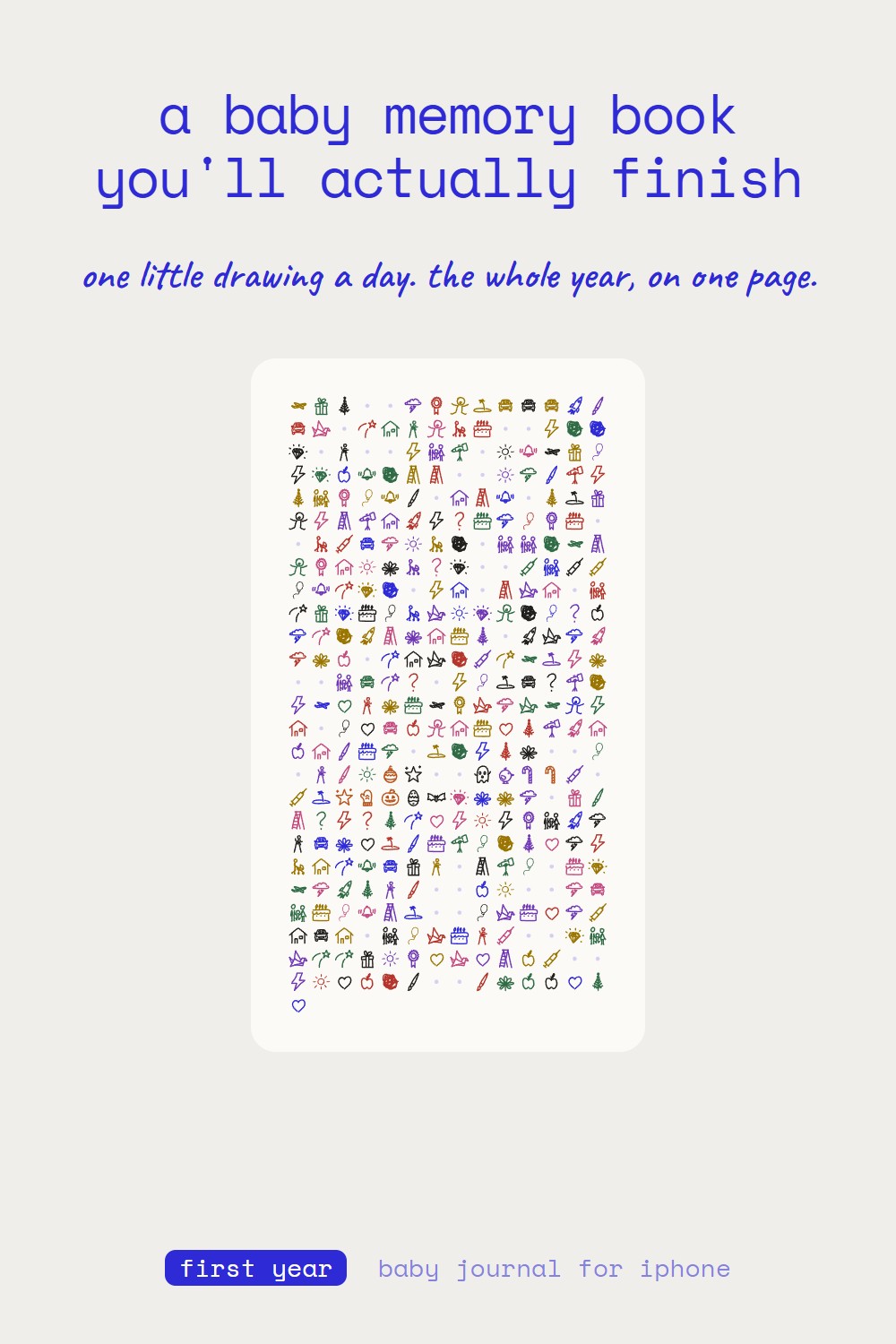
5. the whole year on one page
one small mark for every day, so the year has a shape you can see at a glance: the busy weeks, the quiet ones, the day everything changed.
if you already have a memory book
keep it. use the daily lines as the raw material, and fill in the big pages later, when you have an evening. the book becomes the edit, and the daily notes make sure there is something to edit.
for the nights you don't know what to write, try these sixty prompts.
first year does 1, 2 and 5 in one place: one photo, one line and one little drawing a day, with the whole year on one page and every photo kept as a print. missed days stay quietly empty, and you can fill them in whenever you like. iphone, no account, and the first day is free.